Current NG2 repair
The fixed sequential reconstruction path keeps DeClick and DeCrackle independent, with separate Off, Automatic and Manual controls.
VinylRest File repairs clicks, pops and fine crackle with the current NG2 reconstruction engine, then optionally applies NRNG S150 or S200 surface-noise reduction. Process one file or a complete folder while the original recording remains untouched.
VinylRest File 1.00b1 (build 8) · Free public Beta · Universal 2 · macOS 15.4 or later
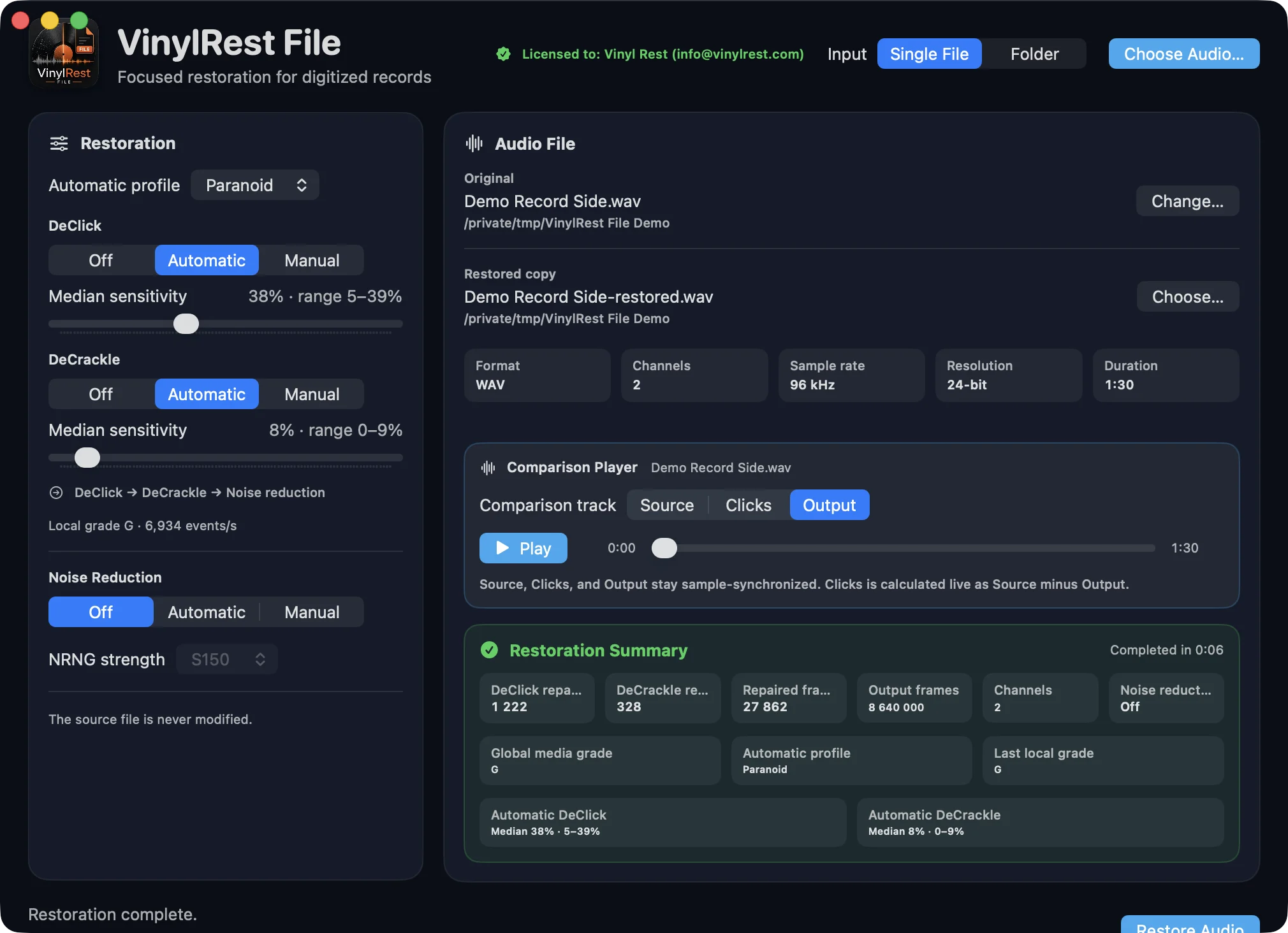
VinylRest File applies one documented restoration chain, keeps every stage independently controllable and publishes a new restored copy with compact analysis reports.
The fixed sequential reconstruction path keeps DeClick and DeCrackle independent, with separate Off, Automatic and Manual controls.
Independent DeClick and DeCrackle decisions update every 1.8 seconds and are preserved in the sparse settings timeline.
Learn one second of surface noise near the beginning, then apply a fixed whole-file ceiling selected from the global media grade, capped at 12 dB.
Choose Paranoid, Light, Mid, High or a validated Custom table for independent DeClick, DeCrackle and NR curves.
Switch between Source, removed Clicks and restored Output at the same exact sample position after processing.
Review a deterministic, non-recursive queue and process multiple files concurrently within a saved machine-aware limit.
VinylRest File now uses the current NG2 path exclusively: DeCrackle receives the DeClicked signal, then optional NRNG follows both repair stages. There is no method selector to configure.
After processing, use one player to compare three sample-synchronized tracks without losing your position.
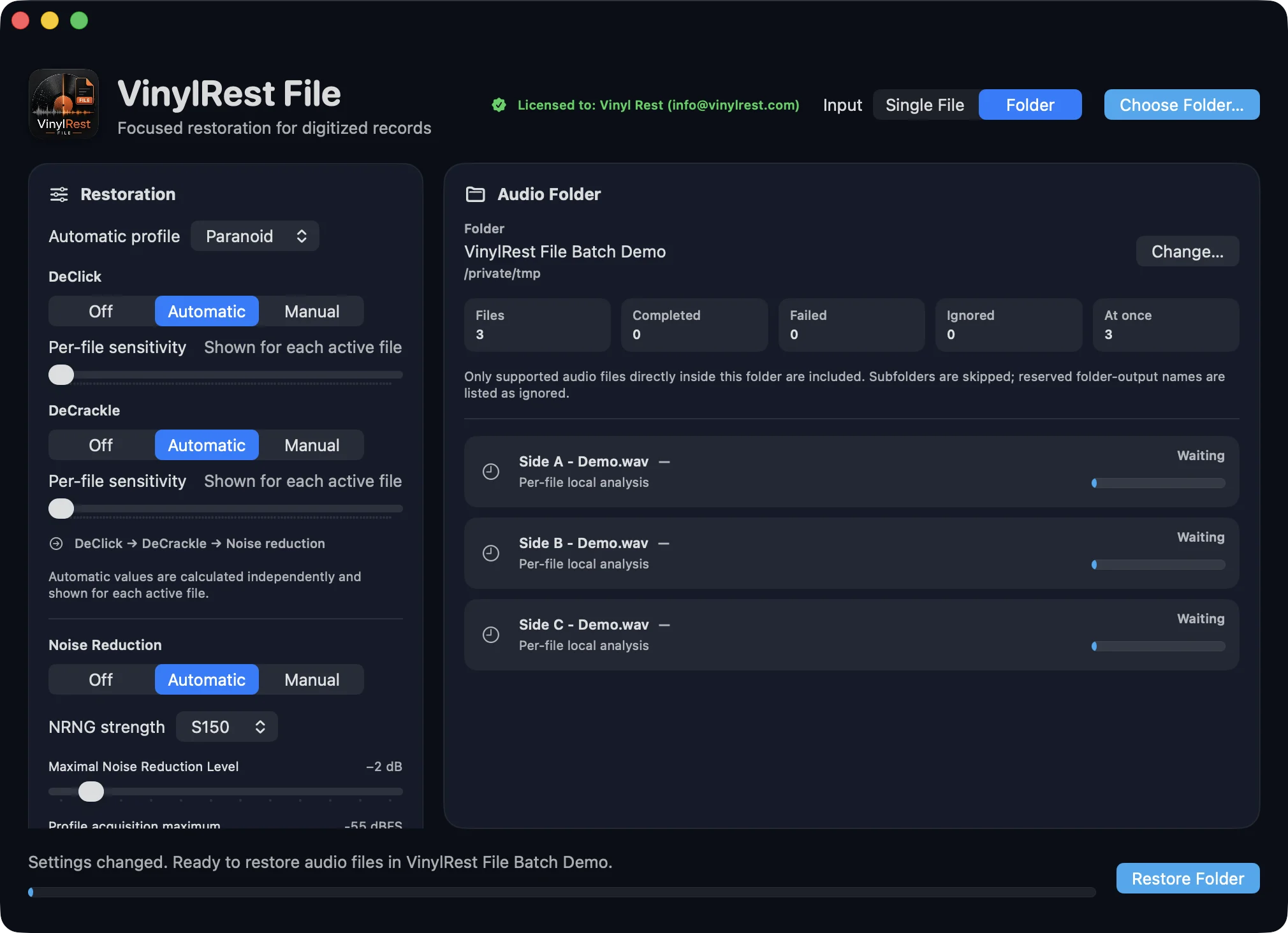
VinylRest File discovers supported files directly inside one selected folder, skips generated outputs and never descends into subfolders. Every job uses the same immutable settings snapshot.
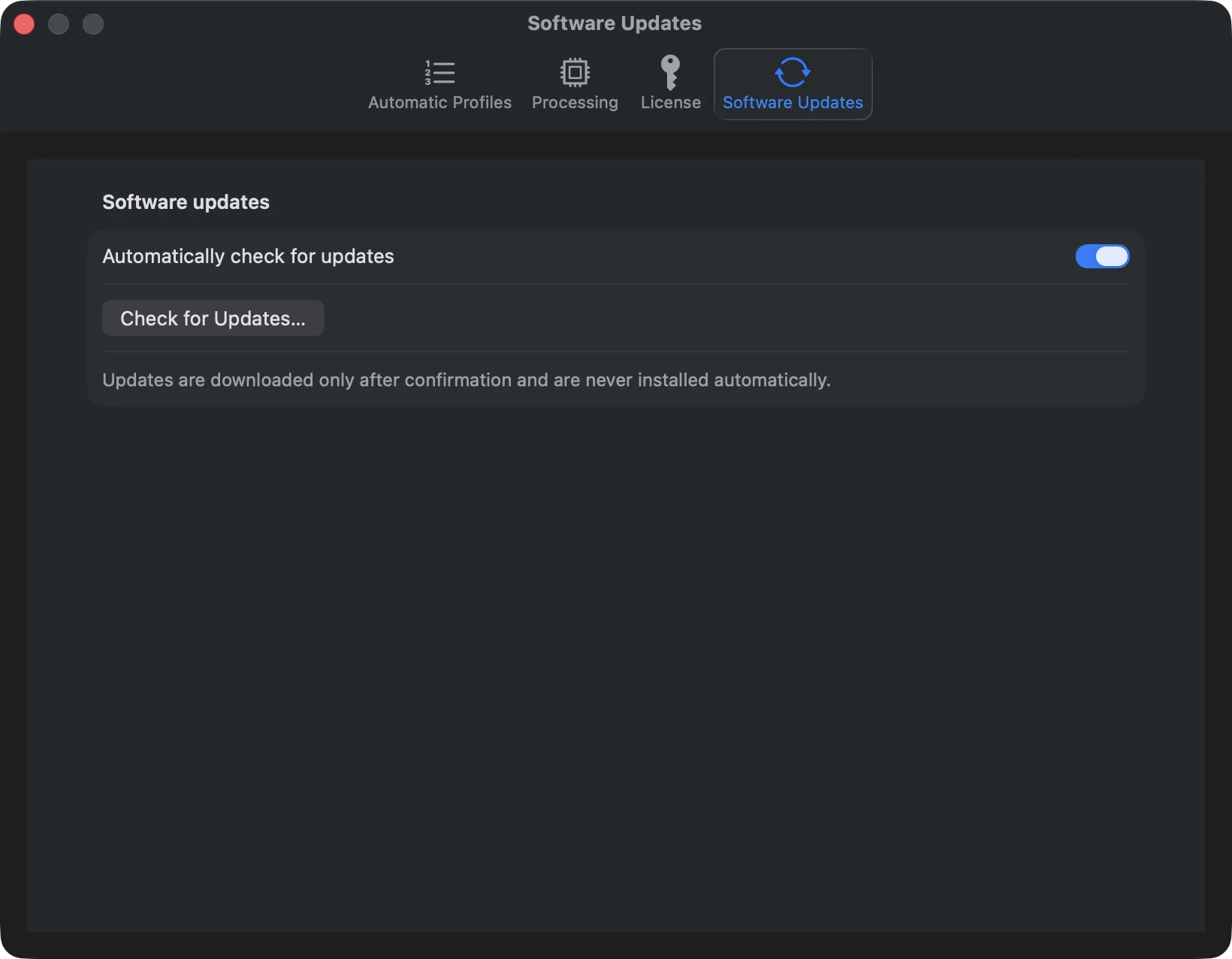
The first update-capable Beta is installed manually from the signed Universal 2 disk image. VinylRest can then check for signed Beta updates inside the application.
The restored file keeps the source container and codec, channel layout, sample rate, bit depth, frame count and duration.
Analysis and restoration preserve the exact source timeline while the native engine processes high-resolution mono or stereo recordings. Actual speed depends on the Mac, source format, sample rate, active stages and folder concurrency.